Code Red
Artificial intelligence is no longer merely a technological story. It is becoming a labour-market story, a social-stability story and, increasingly, a middle-class survival story.
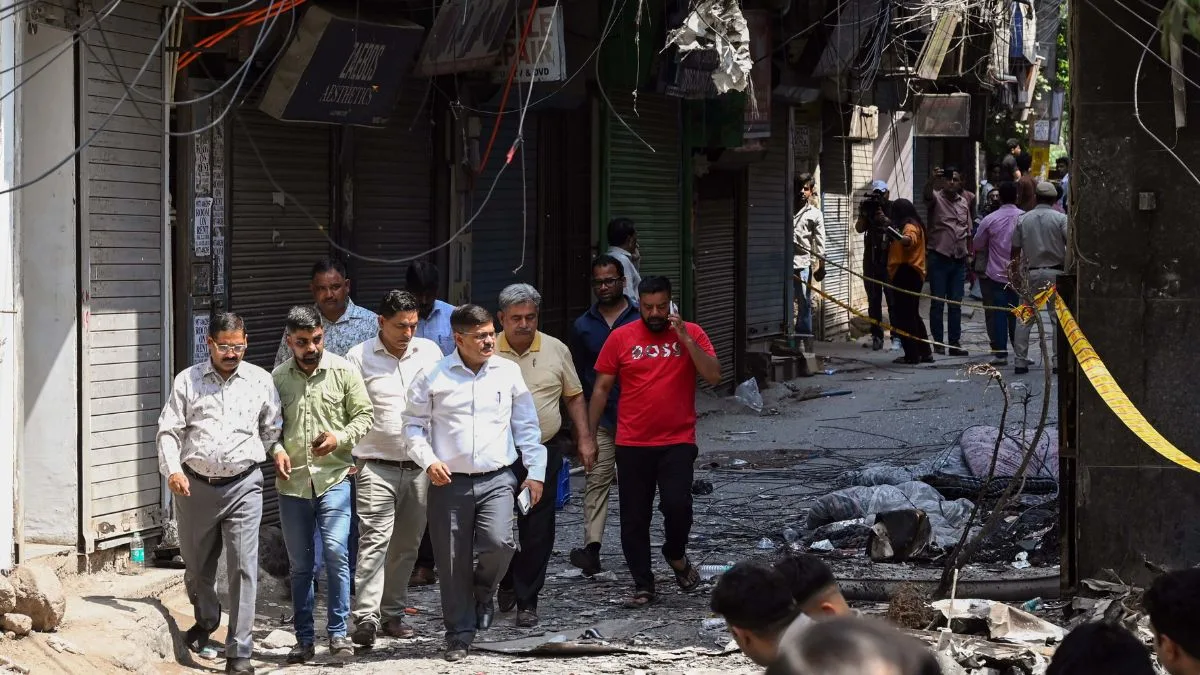
In broad daylight on a busy Hyderabad street in April 2023, a woman was suddenly attacked by a man wielding a knife.




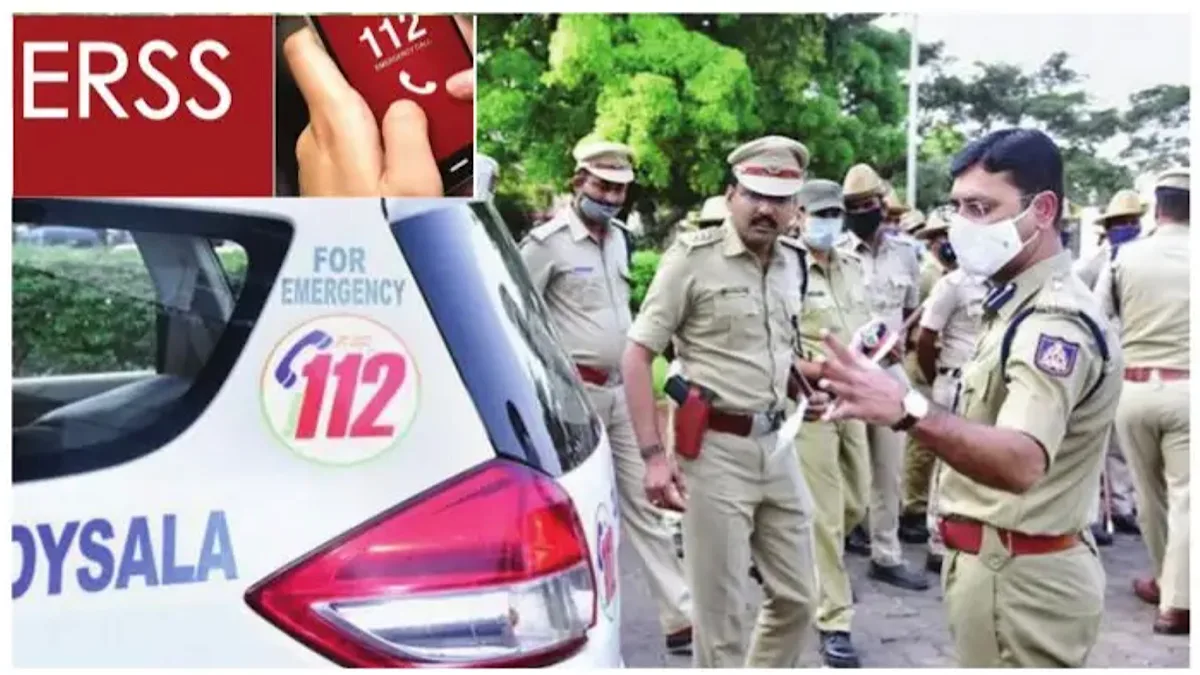
Photo:SNS
In broad daylight on a busy Hyderabad street in April 2023, a woman was suddenly attacked by a man wielding a knife. Five bystanders, including an auto driver, sprang into action, stopping the assault, tying a cloth around her bleeding neck, and rushing her to a hospital. “We consider it our duty to save a woman from any violence,” they said, their courage earning them recognition and ultimately saving her life.
These bystanders acted because they were therein the right place at the right time, witnessing the crisis unfold. But what if the same incident had occurred at night, on a dark street corner, with no one around to hear her cries? How could such heroes know a woman was in danger? This is precisely the promise of the “112 India” initiative, a quietly launched, powerful citizen-centric safety tool under the national Emergency Response Support System (ERSS), rolled out by the Ministry of Home Affairs, with support from the Centre for Development of Advanced Computing (C-DAC) and the Ministry of Women and Child Development, under the Nirbhaya Fund. The National Annual Report & Index on Women’s Safety (NARI 2025), drawing on the experiences of over 12,400 women across 31 cities, reveals that 35.4 per cent of women feel unsafe in public spaces, and out of every 100 incidents of harassment, only 16 reach women’s helplines.
Advertisement
This gap reflects low awareness and limited trust in existing support systems. 112 India has the potential to close this divide ~ making emergency help simpler, and importantly, community-backed, offering a trusted lifeline. 112 India unifies police, fire, ambulance, disaster response, and helplines for women and children under a single number: 112, India’s own 911. This integration eliminates the confusion of multiple helpline numbers like 100, 101, 108, 181, and others.As of March 2025, ERSS-112 reportedly handled 1.2 million calls per hour. ERSS-112 is deployed as a State-centric system, receiving distress calls from citizens over 10 different channels (Voice Call, SMS, SOS, Email, Web Request, conversational AI Chatbot, Media Crawler, IoT-based Signals, WhatsApp and External Signals), on a common platform setup in the ‘Public Safety Answering Point (PSAP)’ of the States. Calls from citizens on the ‘Call-Taking System’ are forwarded with complete incident data for further action.
Advertisement
Emergency Response Units (vehicles) are equipped with Mobile Data Terminals, enabling real-time tracking and communication. The panic button and Global Positioning System facility in all mobile phone handsets Rules, 2016 mandate “panic button” functionality for mobile handsets sold in India. On a smartphone, pressing the power button three times quickly activates a panic call. On a feature phone, long pressing the 5 or 9 key does the same. Innovation lies in two unique features on the 112 India App, available on both Google Play Store and Apple App Stores: “Volunteer” and “Shout.” The Volunteer option allows common persons to register as active volunteers by uploading a KYC document, to be verified by the local police before approval. This ensures responsible and trusted volunteers. The ‘SHOUT’ feature is designed for women and children in distress.
When activated, “SHOUT” sends a quick alert to nearby volunteers and pre-selected contacts along with the police. This alert provides the victim’s precise location, allowing willing volunteers to quickly reach the scene and provide a vital presence. Integrating technology with community action, 112 India transforms ordinary citizens ~ shopkeepers, teachers, neighbours ~ into active bystanders.In an emergency, the first help a person receives often comes from a stranger. When every second counts, volunteers can reach the victim faster, provide reassurance, or simply stand guard as the police arrive. Thus 112 India empowers women and children, giving them confidence that helpis more accessible now. Volunteers have the option to decide whether to assist, based on their judgment of safety.
The Home Ministry needs to consider providing AI-driven online training programs for all registered volunteers. Instead of static videos, adaptive learning modules and AI-powered simulations could build active bystander skills – how to assess a situation, ensure their own safety, intervene without risk by de-escalating conflict, or guide victims to safety rather than directly confronting perpetrators. Mandatory personalized training will ensure that volunteers are not only willing but also confident, prepared, and safe, thereby improving quality of the response.States need to activate and operationalize every feature of 112 India to ensure consistency across the country.
The Bengaluru Police is reportedly planning an AI-powered voice assistant in its 112 helpline to allow callers to communicate in over 15 Indian and foreign languages, including Bengali, Manipuri, Spanish, and Arabic. This innovation ensures that even tourists, students, and migrant workers can seek help instantly in their own language. Globally, the need for a single and simple emergency number was feltafter the Kitty Genovese tragedy in New York City in 1964. About 37neighbours heard Kitty’s cries during her murder but none called police ~ highlighting apathy, and the absence of an easy way to call help. The case is thought to be one of the reasons for the 911 emergency call system that the United States has been using since 1968.
It is based on the idea that simplifying the call for help could overcome bystander hesitation. Over time, 911 became part of the American culture: schoolchildren are taught how to dial 911, media reported stories of kids saving parents with quick calls.When a child’s failed attempt to save her mother by dialling 911 from a hotel phone that required dialling ‘9’ for an outside line, Kari’s Law (2018) mandated direct 911 dialling from all multi-line systems without the need for any prefix. Across the European Union, ‘112’ has become the universal standard under Directive 2002/22/EC.
Russia and South Africa also use it as primary emergency number. Due to global mobile interoperability, even in countries like the USA, dialling 112 connects directly to local emergency lines. Apps like PulsePoint in the US and GoodSAM in the UK mobilize off-duty professionals like doctors as first responders. 112 India goes further: it empowers every responsible citizen.It is now the moral responsibility of every capable citizento register as a volunteer.Schools, colleges, workplaces, and community groups should spread awareness. Just as blood donation became a civic duty, so too should “safety volunteering.”
(The writers are, respectively, a Transparency Advocate, and an M.S. (AI) student at Lewis University, Chicago )
Advertisement